How To Stop Relationship Anxiety
Most people worry about their relationships sometimes. That is normal. Relationship anxiety is different. It is persistent worry that shows up even when nothing is actually wrong, turning a delayed text or a quiet mood into proof that something is falling apart.
The good news is that relationship anxiety responds well to understanding and practice. It usually points to something underneath: an attachment pattern, a past hurt, or how you see your own worth. At Collaborative Therapy, working through these patterns with a psychotherapist in Mississauga can help you get to the root of it rather than just managing the symptoms.
Spotting Relationship Anxiety
Relationship anxiety is ongoing fear or insecurity about a relationship that goes beyond what the situation actually calls for. It is not the same as having a real concern and wanting to talk about it. It is the anxious mind generating fear from neutral or unclear information. A delayed reply becomes evidence of disinterest. A disagreement becomes proof you are not enough.
How It Shows Up Day to Day
Common signs include constant overthinking of conversations, needing frequent reassurance, panic when a message goes unanswered, assuming the worst, trouble trusting without a clear reason, jealousy that feels out of proportion, your mood depending heavily on your partner's mood, and checking your partner's online activity or social media often.
One or two of these now and then is normal. Several showing up regularly, taking up a lot of mental space, points to relationship anxiety.
Where It Comes From
Anxious attachment. When caregiving in childhood was inconsistent, sometimes warm, sometimes distant, children often develop a pattern of craving closeness while fearing it could disappear. In adulthood, this shows up as strong sensitivity to any sign of distance. Individual therapy often starts here, looking at where these patterns first formed.
Past relationship pain. If a previous relationship involved betrayal or a painful ending, similar feelings in a new relationship can trigger the same fear, even when the situation is different. This is one reason trauma from past relationships can quietly shape a new one.
Low self-esteem. Doubting your own worth often leads to doubting whether a partner's feelings are real.
General anxiety. People who worry persistently in other areas of life often bring that same pattern into their relationships.
Why Your Body Reacts So Strongly
The amygdala, the brain's alarm system, does not separate physical threats from emotional ones. A delayed text is not dangerous, but the brain can react as if it is. This raises cortisol, the stress hormone, and when this happens repeatedly, it leaves you feeling tense and worn out.
The sympathetic nervous system drives the urge to check, ask, or seek reassurance right away. The parasympathetic nervous system is the calming counterpart, and learning to activate it on purpose is one of the most useful tools available.
The Loop That Keeps It Going
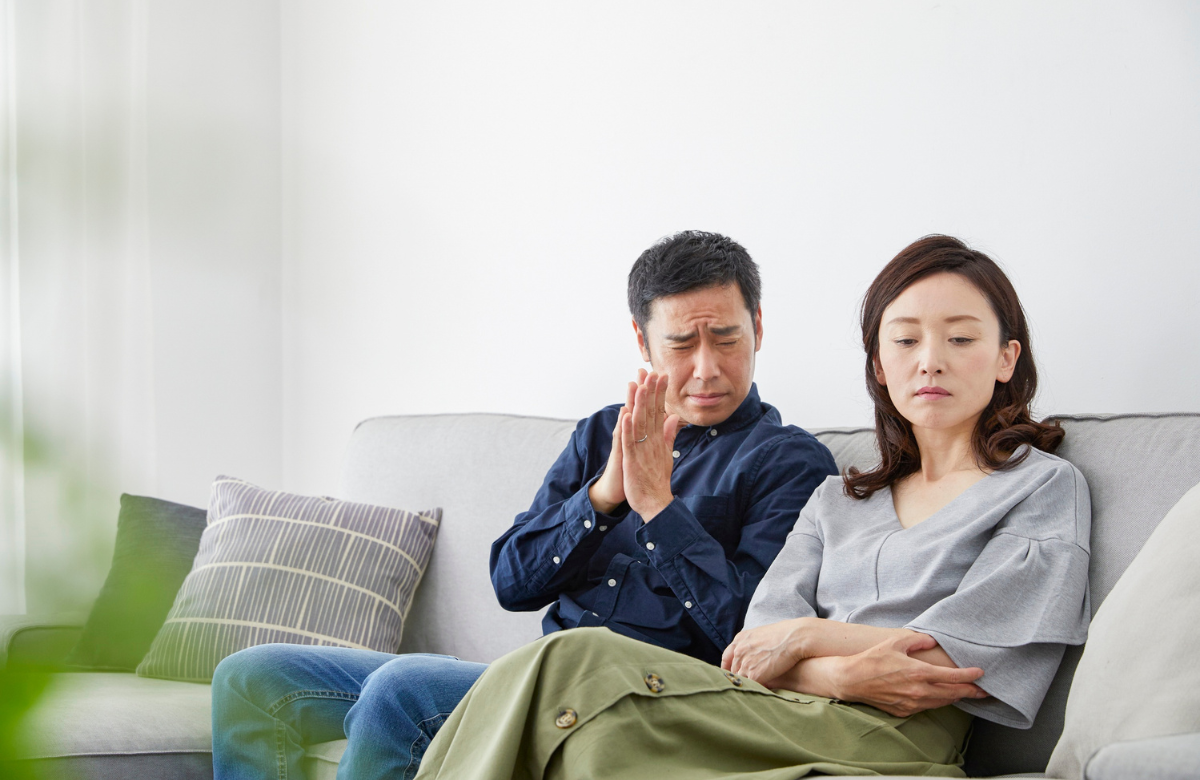
A small, unclear event happens. The mind jumps to a fearful interpretation. Anxiety spikes. You seek reassurance. Your partner responds, and you feel relief, briefly. Because the relief came from outside rather than from resolving the fear itself, anxiety returns soon after, and the cycle repeats.
This loop does not fix the anxiety. It teaches the brain that reassurance is the answer, instead of teaching it that the fear was not accurate in the first place.
Putting Anxious Thoughts to the Test
Anxious thinking often shows up as mind reading, assuming you know what your partner thinks without evidence, catastrophizing, turning a small moment into a disaster, and worst-case thinking, building a whole story from one detail. This kind of thought pattern is something CBT addresses directly, by teaching you to test thoughts against evidence rather than treat them as facts.
Before reacting, ask three questions. What evidence supports this fear? What evidence goes against it? Is there another explanation that fits just as well? Often the calmer explanation, a long day, a distracted moment, fits the facts better than the fearful one.
Settling Your Body in the Moment
Calming the body helps calm the mind. Try slow breathing: four counts in, hold four, four counts out, hold four. A short walk gives anxious energy somewhere to go. Tensing and releasing your muscles releases built-up tension. Mindfulness brings your attention back to now, away from the anxious story about later.
Breaking the Reassurance Habit
Reassurance feels helpful in the moment but keeps anxiety going long term, because it never deals with the actual fear. Common patterns include asking repeatedly if your partner still cares, checking messages or read receipts often, and watching their online activity.
Reducing this is not about ignoring your feelings. It is about sitting with the discomfort long enough to notice it passes on its own. Each time that happens, your brain learns the fear was not as urgent as it felt.
Talking to Your Partner About It
Use "I" statements instead of accusations. Instead of "you never tell me how you feel," try "I feel anxious when I am unsure where things stand, and checking in sometimes would help me." Honesty about your fears, even though it feels exposed, usually brings partners closer rather than pushing them away. Couples therapy can help both people build this kind of communication together.
Trust Grows, It Is Not Guaranteed
No relationship offers full certainty, even the healthy ones. Trust is not certainty. It is something built gradually by watching consistent actions over time. Instead of asking "how can I be sure," ask "what has this person's actual pattern shown me so far."
Having a Life of Your Own
When your entire sense of stability depends on the relationship, every normal up and down feels like the ground shifting. Hobbies, friendships, personal goals, and self-care give you other sources of steadiness. This does not mean caring less about the relationship. It means the relationship is one important part of your life, not the whole structure holding it up. Working on this alongside self-esteem tends to make the biggest long-term difference.
A Quick Grounding Exercise
The 5-4-3-2-1 method helps in anxious moments. Notice five things you see, four you can feel, three you can hear, two you can smell, one you can taste. This takes under two minutes and pulls attention away from the anxious spiral.
Strengthening How You See Yourself
Much of relationship anxiety is really about how you see yourself. Practicing realistic self-talk, journaling, noting things you are grateful for, and tracking small wins all build a steadier sense of your own value, one that does not depend entirely on the relationship.
Telling Anxiety Apart From Real Problems
This distinction matters. Anxiety-based fears are built on assumptions and "what ifs" about ambiguous events. Real concerns are based on actual patterns: repeated dishonesty, manipulation, disrespect of your boundaries, or behavior that consistently makes you feel smaller.
If your worry comes from interpreting unclear moments, the strategies here can help. If it comes from a real pattern of harmful behavior, that deserves to be addressed directly, sometimes with the support of couples or individual therapy.
Knowing When to Get Support
Consider reaching out if anxiety is constant, causes panic, leads you to test your partner or pull away to avoid being hurt, or is affecting your sleep and daily life. Cognitive Behavioural Therapy, attachment-focused therapy, individual counselling, and couples therapy can all help depending on what is going on. A free 15-minute consultation is available with no referral needed.
Final Thoughts
Relationship anxiety is common and it gets better with the right approach. It usually comes from fear, not facts, often shaped by attachment patterns, past experiences, or self-worth. Security is not built by removing uncertainty. It grows through self-awareness, a calmer nervous system, honest conversation, and a steadier sense of your own value. Progress comes through practice, not perfection.
FAQs
What causes relationship anxiety?
Often anxious attachment from childhood, past relationship pain, low self-esteem, or general anxiety carrying over into the relationship.
How do I stop overthinking in a relationship?
Notice the thought, check the evidence for and against it, and use grounding techniques like slow breathing when overthinking spikes.
Is relationship anxiety normal?
Occasional worry is normal. It becomes a concern when it is constant and starts affecting you or the relationship.
Can it ruin a healthy relationship?
Yes, if left unaddressed, constant reassurance-seeking and jealousy can create real strain even in a good relationship.
What is anxious attachment?
A pattern formed from inconsistent early caregiving, where someone craves closeness but fears it can disappear.
How do I stop needing reassurance?
Practice sitting with the anxious feeling without acting on it, and notice it passes on its own.
Does mindfulness help?
Yes, it interrupts worst-case thinking and brings focus back to the present.
How do I know if it's anxiety or a real problem?
Anxiety comes from assumptions about unclear events. Real concerns come from actual repeated behavior.
Can therapy help?
Yes, CBT, attachment-based therapy, individual counselling, and couples therapy all help in different ways.
How long does it take to improve?
It varies. Many people notice change within weeks of consistent practice, though deeper patterns take longer.
Related at our clinic:couples therapy · anxiety therapy in Mississauga